Centrifugal casting is the preferred manufacturing process for cylindrical components that demand structural integrity — pipe, rings, bushings, sleeves, rolls, and cylinders where porosity, inclusions, and shrinkage are simply not acceptable. By spinning molten metal at high speed within a rotating mold, centrifugal casting produces parts with a dense, refined grain structure that outperforms any other casting method for these geometries.
If you're sourcing centrifugal castings or you're a foundry that specializes in them, TCMA's directory connects you directly with verified manufacturers built for this process. Submit your project below and we'll handle the matching.


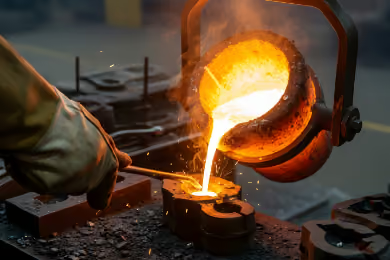
Explore featured TCMA member foundries and casting suppliers serving buyers across North America.
In true centrifugal casting, a cylindrical mold — horizontal, vertical, or inclined — is rotated at high speed while molten metal is poured into its interior. Centrifugal force (typically 60–100 Gs) drives the metal outward against the mold wall, where it solidifies from the outside in. The result is a casting with maximum density in the structural wall and any lighter impurities concentrated at the bore — where they are subsequently machined away, leaving only clean, dense metal in service.
The process produces hollow cylinders without the need for a core — a significant advantage over static casting methods for pipe, rings, and sleeve geometries. The absence of a central core also eliminates core-shift defects common in sand casting of hollow shapes.
Centrifugal casting supports an extremely broad alloy range, including high-temperature and corrosion-resistant alloys that are challenging or impossible to process in die casting. This makes it the standard process for refinery furnace tubes (HK, HP alloys), pump casings in aggressive service, marine propeller shafts, and nuclear component applications — anywhere that material integrity over long service life is the primary design requirement.
Molds for centrifugal casting are typically made from steel, iron, or graphite — permanent tooling that lasts for thousands of pours and results in excellent as-cast surface quality on the outside diameter. Part diameters range from under 2 inches to well over 10 feet depending on the foundry's equipment, with some US centrifugal casters capable of producing castings exceeding 30,000 lbs.
Buyers searching for centrifugal casting foundries are typically working on specific, high-value applications — refinery components, marine shafts, power generation hardware. They search specifically and they need to trust their source. A verified TCMA listing backed by detailed capability information puts your foundry in front of these buyers at the exact moment they're sourcing. Featured members receive top-of-page placement and homepage visibility across the TCMA network.
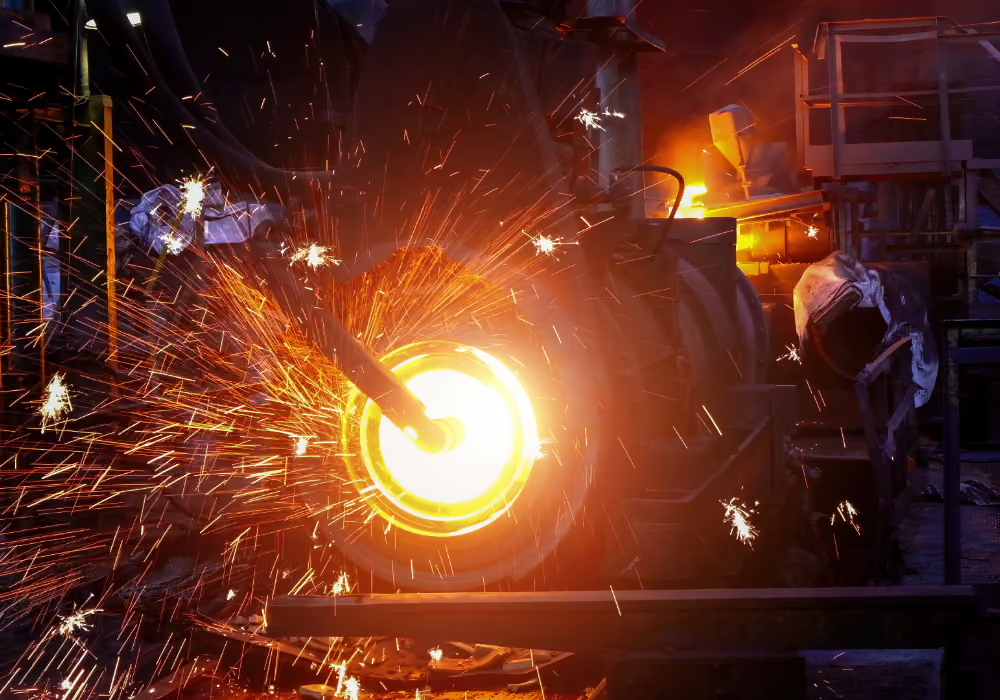
Tell us your alloy, dimensions, and application — we'll connect you with a centrifugal casting manufacturer built for your requirements.